News
Whitewater Group shortlisted for KPMG Elevation Select 2026

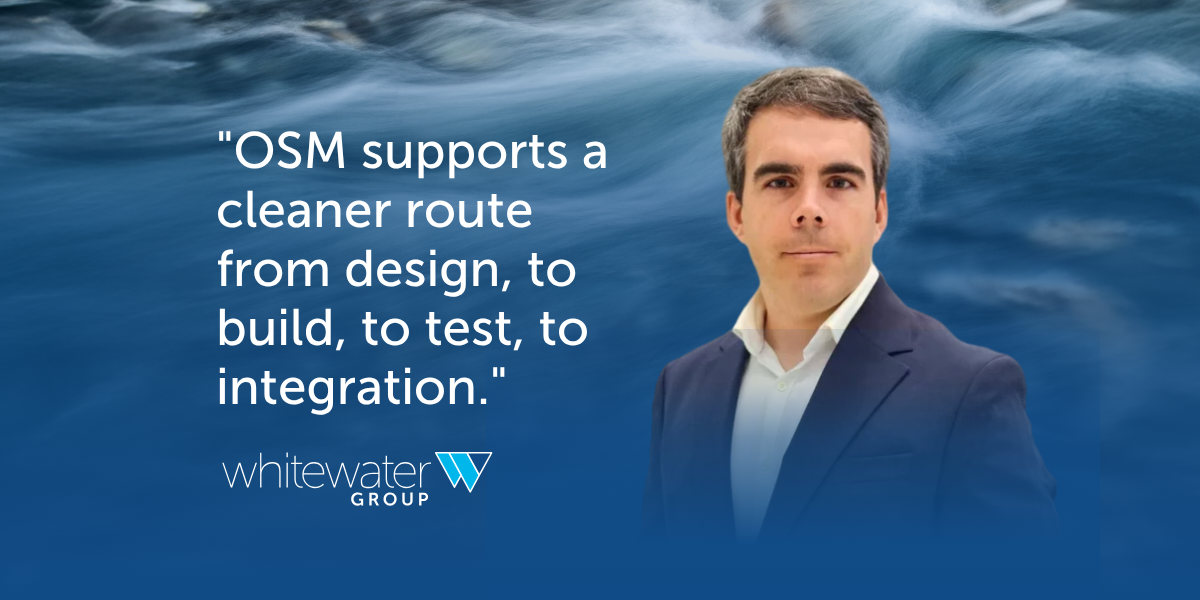
Rafael Jiménez Garrido, Operations Director at Whitewater Group
Data centres are being delivered differently now. Not because the industry likes buzzwords, but because the old way of doing things is harder to rely on.
Programmes are tighter. Sites are busier. Supply chains are less predictable. And clients, especially hyperscalers, have less appetite for late fixes and loose ends. At the same time, water has moved up the agenda. It is no longer a background utility. It sits right alongside performance, resilience, and the right to operate.
That combination is why offsite manufacturing, or OSM, has become central to how water treatment and cooling related systems are being delivered.
OSM gets talked about like it is a product. It is not. It is a way of working.
When you build a water treatment system or a packaged plant room on site, you are always dealing with variables. Weather, access, congestion, sequencing, trades working over each other, and late changes that ripple through everything. You can still deliver great results, but it usually takes more effort and more risk. You tend to feel that most at the end of the job, when time is gone and every interface matters.
Offsite changes the dynamic. You are building in a controlled environment. You can plan the workflow properly. You can run the same checks the same way every time. You can standardise documentation. You can test earlier. You can spot issues before they become site problems.
Put simply, you move the work to a place where you can control it.
For operators, that matters because it reduces the number of unknowns when the system arrives on site. And in a data centre programme, unknowns are expensive.
Cooling performance depends on water. That sounds obvious, but it is often treated like a detail until something goes wrong.
Water quality drifts. Scaling starts. Corrosion risk increases. Chemical dosing becomes harder to control. Efficiency drops. Maintenance climbs. Over time, that becomes a reliability problem.
So water treatment is not only about compliance or best practice. It is part of protecting uptime. If the cooling water side is not stable, everything else gets harder.
Now add another layer. Water efficiency and water use are being watched more closely, particularly in places where the wider context is water sensitive. That makes the engineering choices more visible. It also makes delivery quality more important, because you need systems that perform as intended, consistently, not just on day one.
Spain has become a major growth market for European data centres. Large investment has been announced and the pace is clear. With that growth comes attention. Resource use gets questioned. Performance claims get tested. Expectations rise.
This is one reason you are seeing more focus on regional capability. Not just where projects are built, but how they are supported. Local manufacturing capacity matters. Local teams matter. If the market expands, delivery standards must expand with it.
If you have worked on hyperscale programmes, you will recognise the shift. It is not only speed. It is consistency.
When a client is rolling out across multiple sites, they want the same outcome every time. That shows up in how they view quality checks, documentation, testing, labelling, controls integration, and handover packs. The tolerance for “we will sort it on site” drops to near zero.
This is where OSM earns its place. It gives you a better chance of arriving on site with something that is genuinely ready to integrate and commission, rather than something that simply exists.
A system can be delivered and still not be ready.
Anyone who has been at the sharp end of handover knows the difference. If documentation is incomplete, if labelling is unclear, if interface ownership is fuzzy, if controls are not validated, you lose time. When you lose time at the end of a data centre programme, it hurts.
In practical terms, commissioning ready should mean:
None of this is glamorous, but it is what makes delivery predictable.
There is another piece that does not get said enough. Capability is becoming a constraint.
Facilities matter, but people matter more. If the market is growing in Spain, the industry needs engineers, technicians, manufacturing specialists, and commissioning capability. It needs people who like standards, who take documentation seriously, and who understand that reliability is the job.
That is why recruitment is not separate from delivery. It is part of how you deliver well at scale.
This is where our positioning becomes real.
At Whitewater Group, we focus on engineered water systems for critical environments. Data centres sit right at the heart of that. The direction of travel is clear. Clients want speed, but they also want certainty. They want systems that are properly tested, properly documented, and properly ready to hand over.
OSM helps make that possible. It supports a cleaner route from design to build to test to integration. It reduces variability and strengthens repeatability. It gives teams a better chance to deliver the same standard, again and again, across multiple sites and programmes.
The industry will keep moving fast. The winners will be the teams who can move fast without losing control.
That is what our tagline is about.
Water, engineered.
This article was originally published in Spanish on DataCentreDynamic website -https://www.datacenterdynamics.com/es/opinion/la-refrigeraci%C3%B3n-necesita-agua-el-agua-necesita-innovaci%C3%B3n-offsit