News
Whitewater Group shortlisted for KPMG Elevation Select 2026

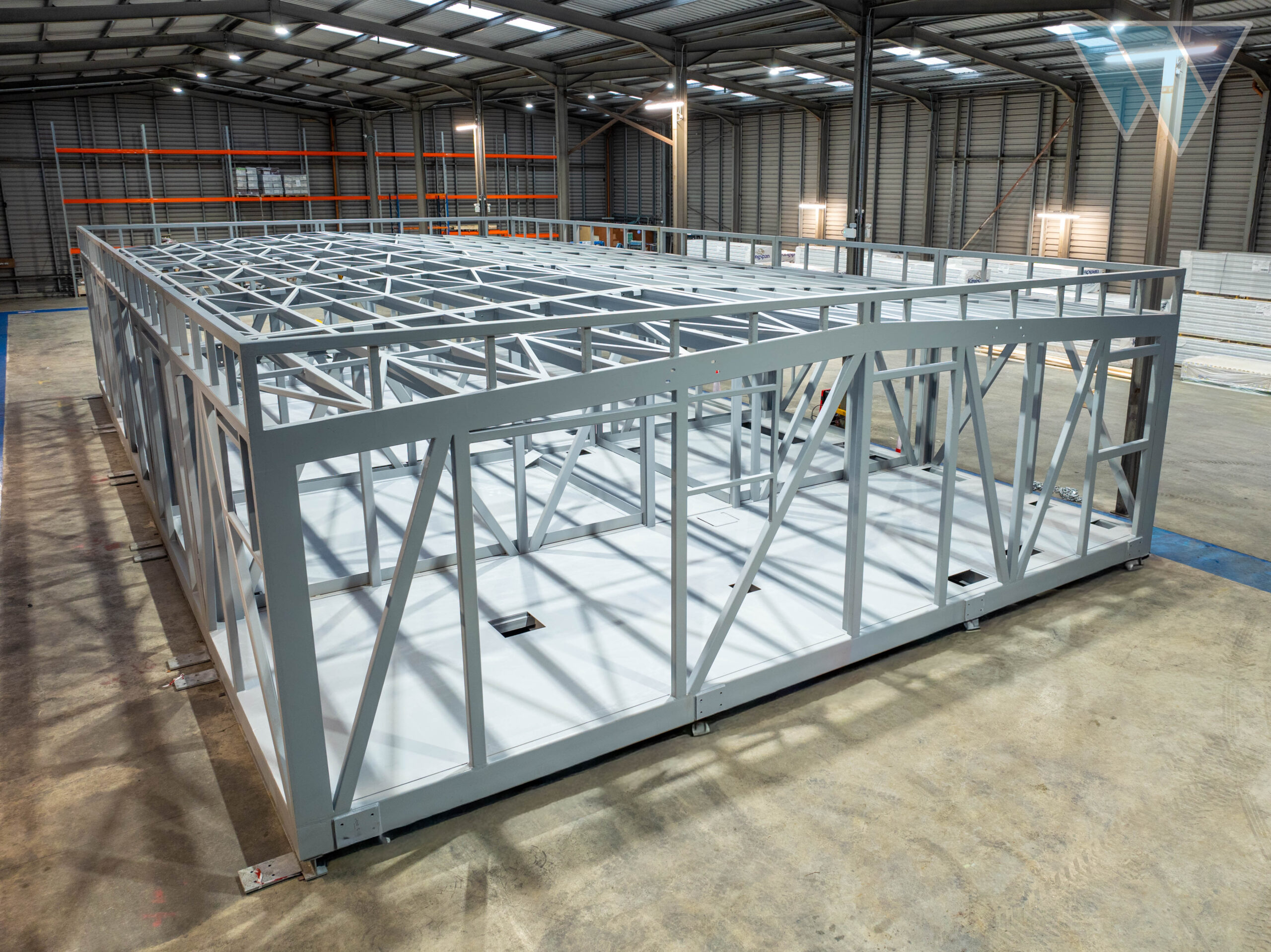
As data centres, pharmaceutical facilities and other critical infrastructure projects become larger, faster and more complex, the way mechanical and process systems are delivered is changing.
Traditional stick-build construction remains appropriate for many applications, but on programmes where programme certainty, repeatability and quality are critical, Off-Site Assembly (OSA) offers significant advantages.
For Whitewater Group, OSA is not simply a different method of construction. It is part of a broader approach that brings together early engagement, engineering, standardisation, manufacturing, QA/QC, installation, commissioning and operational support.
In a traditional stick-build model, individual components, pipework, valves, instruments, electrical equipment and supports are delivered separately to site and assembled in the final location.
This gives project teams considerable flexibility, but it also transfers a large proportion of fabrication, coordination and quality control into the construction environment. Labour availability, weather, logistics, access, overlapping trades and programme pressures can all affect productivity.
OSA moves a significant proportion of this activity into a controlled manufacturing environment.
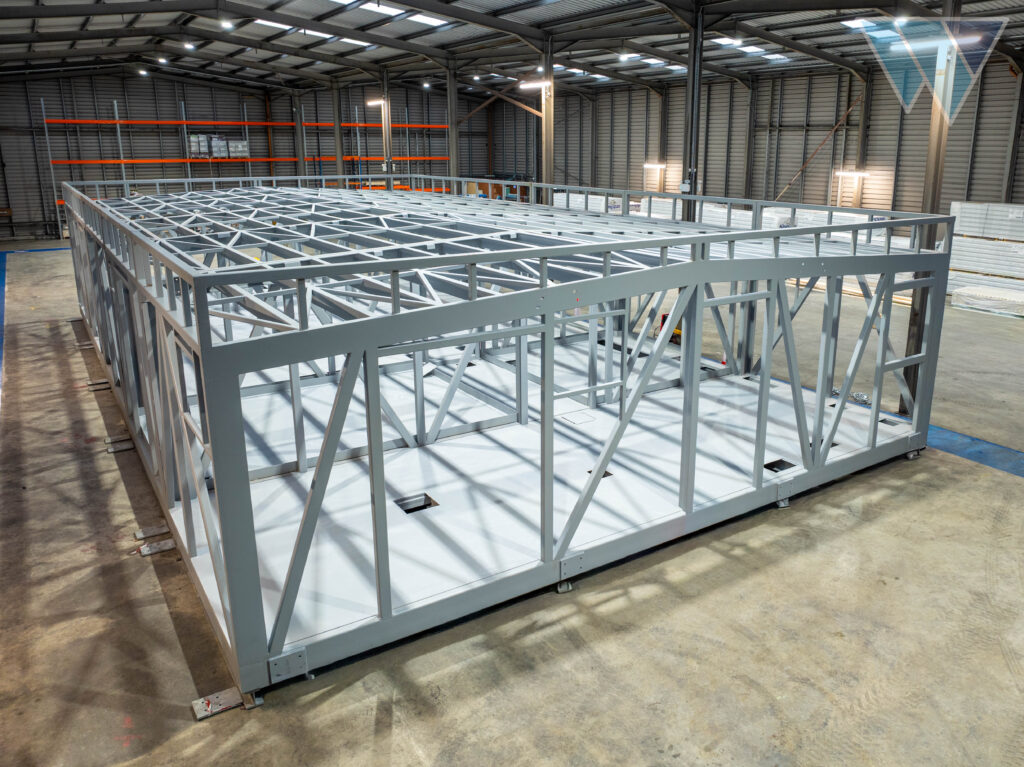
Water treatment skids, cooling water systems, packaged plantrooms and associated pipework can be engineered, assembled and tested off site before being transported to the project. On site, the emphasis shifts towards positioning, connection, integration and commissioning rather than fabrication from individual components.
The result is a more controlled and repeatable delivery process.
One of the biggest advantages of OSA is the ability to manufacture systems in parallel with construction activity on site.
Rather than waiting for plantrooms or technical spaces to become available before mechanical assembly can begin, fabrication can progress while enabling works, building construction and other packages continue.
This can significantly reduce the amount of work required during critical stages of the construction programme and gives project teams greater confidence around delivery dates.
Our experience delivering water infrastructure for hyperscale data centre programmes across Europe has demonstrated the value of this approach. Systems can be assembled and progressively tested in our manufacturing facilities before shipment, allowing site teams to focus on efficient installation and integration when the equipment arrives.
Moving assembly off site also provides a much more consistent environment for quality control.
Fabrication takes place using defined production processes, inspection points and documented QA/QC procedures. Equipment is accessible throughout assembly, allowing systems to be inspected and tested before they leave the facility.
For critical water and cooling systems, this is particularly important.
Water treatment, process water and cooling infrastructure may incorporate filtration, reverse osmosis, dosing, pumps, heat exchangers, control systems, instrumentation and complex distribution arrangements. Problems identified after installation can be difficult and expensive to correct.
OSA allows many of these issues to be identified earlier, before equipment reaches the project.
Factory testing can also support a structured progression through commissioning, giving both Whitewater Group and the client greater visibility of system readiness.
OSA works particularly well when it is supported by a clearly defined Basis of Design.
Early in a programme, Whitewater Group can work with the client, consultant, general contractor and other project stakeholders to understand the required capacities, operating philosophy, redundancy, water quality, controls, interfaces and future operational requirements.
That Basis of Design becomes the engineering foundation from which repeatable solutions can be developed.
Instead of redesigning every system from first principles, agreed configurations can be standardised around common platforms, skid arrangements, controls philosophies and component selections.
This is particularly valuable on multi-building or multi-campus programmes.
Whitewater Group’s work across hyperscale data centre projects has shown how standardisation can simplify delivery across multiple sites while still allowing the engineering to respond to site-specific requirements. On previous programmes, rationalising and standardising water treatment designs has reduced the number of individual skids required while also creating opportunities to reduce plantroom footprint and simplify integration.
The objective is not standardisation for its own sake. It is to create an engineered platform that can be repeated, improved and deployed efficiently.
The greatest benefits of OSA are realised when the delivery strategy is considered early.
If a system has already been fully designed around traditional site construction, opportunities for modularisation, standardisation and off-site assembly can be limited.
Early engagement allows the project team to consider questions such as:
Addressing these questions during concept and detailed design can have a significant impact later in the programme.
It also allows manufacturing, logistics, installation and commissioning teams to contribute before decisions become difficult or expensive to change.
Water and cooling systems are well suited to an OSA approach because much of the engineering can be packaged into clearly defined systems.
Whitewater Group applies this methodology across areas including water treatment, process water, cooling water infrastructure and liquid cooling systems for data centres.
As data centre cooling strategies evolve and facilities move towards higher-density computing environments, the interfaces between water treatment, heat rejection, cooling distribution and controls are becoming increasingly important.
Designing these systems as an integrated package rather than a collection of isolated components creates opportunities for greater standardisation and more effective off-site manufacture.
This becomes increasingly valuable when clients are deploying similar infrastructure across multiple regions.
OSA does not eliminate work on site, but it changes its nature.
With more fabrication completed beforehand, projects can reduce the number of individual installation activities taking place within congested technical spaces.
This can contribute to:
For clients and general contractors managing highly compressed programmes, reducing complexity at the point of installation can be as valuable as reducing overall construction time.
The real advantage comes when OSA is connected to the entire project lifecycle.
Whitewater Group combines engineering, manufacturing, installation, commissioning, controls and automation, and ongoing operations and maintenance capability within an integrated delivery model.
Lessons learned during manufacturing can therefore influence future engineering. Commissioning experience can feed back into the Basis of Design. Operational knowledge can inform component selection, accessibility and maintainability.
Across successive projects, the solution becomes more mature and more repeatable.
For clients delivering critical infrastructure at scale, that creates a platform for continuous improvement rather than treating every project as an isolated construction exercise.
Stick build will continue to have an important place within construction, particularly where projects are highly bespoke or site conditions demand maximum flexibility.
However, where programmes require repeatability, speed and consistent quality, OSA provides a compelling alternative.
The strongest results come from combining early engagement, a robust Basis of Design, intelligent standardisation and controlled off-site manufacturing.
For Whitewater Group, this approach is helping us deliver increasingly complex water and cooling infrastructure across international projects while maintaining the engineering quality, programme certainty and operational performance our clients require.
Water, engineered.